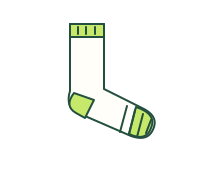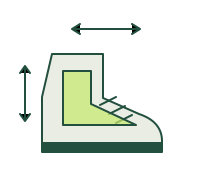
The footwear outline is schematic. Check the cuff with your own shoes.
- no-show: 3.13 in on average (2 models with a published height)
- ankle: no height published (dashed)
- quarter: 5.2 in on average (5 models with a published height)
- mini crew: 5 in on average (1 model with a published height)
- micro crew: 7.66 in on average (32 models with a published height)
- crew: 10.5 in on average (11 models with a published height)
- mid-calf: 9.5 in on average (2 models with a published height)
- over-the-calf: 16.63 in on average (2 models with a published height)
Heel-to-cuff measurements are maker averages, not a shared fit guarantee.
Toe-post sandals need toe socks
A sandal with a post between the big toe and the next one needs a sock with toe sleeves. Injinji makes toe socks as thin liners and as midweight trail socks; a liner is the thinnest under a sandal strap.
Strap sandals: thin and quick to dry
A lightweight sock with light or no cushion sits flat under the straps. Merino feels warm on a cool morning; a synthetic dries faster after a crossing. Avoid full cushion: it bunches under straps.
Cuff height with sandals
An ankle or quarter sock keeps grit off without much fabric; a crew covers the lower leg on brushy trails and cool evenings.
When to go without
River walking, heat and wet days: bare feet in sandals dry in minutes, a wet sock does not. Carry a dry pair for camp.