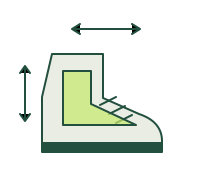
The footwear outline is schematic. Check the cuff with your own shoes.
- no-show: 3.13 in on average (2 models with a published height)
- ankle: no height published (dashed)
- quarter: 5.2 in on average (5 models with a published height)
- mini crew: 5 in on average (1 model with a published height)
- micro crew: 7.66 in on average (32 models with a published height)
- crew: 10.5 in on average (11 models with a published height)
- mid-calf: 9.5 in on average (2 models with a published height)
- over-the-calf: 16.63 in on average (2 models with a published height)
Heel-to-cuff measurements are maker averages, not a shared fit guarantee.
 Standard sock
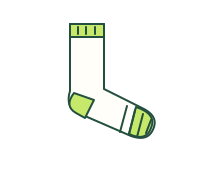 Toe sock
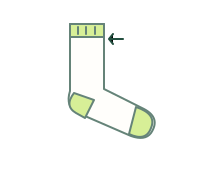 Sock liner
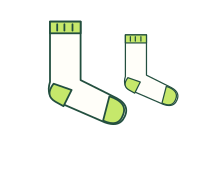 Separate liner + outer
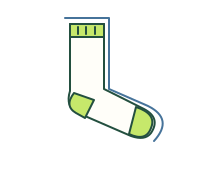 Built-in double layer
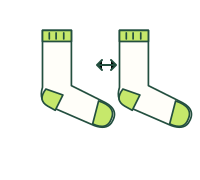
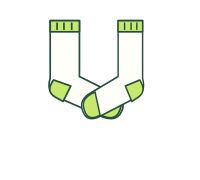 Left and right fit
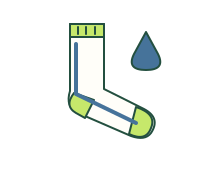 Waterproof membrane
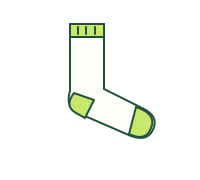
Standard sock
- Foot
- One sock
- Shoe
One continuous sock around the foot.
Toe sock
- Individual toes
- Separate toe sleeves
- Shoe
Fabric separates the toes; check space between and around them.
Separate liner + outer sock
- Foot
- Liner
- Outer sock
- Shoe
Two separate garments, two care and rotation decisions.
Built-in double layer
- Foot
- Built-in inner + outer
- Shoe
Layers stay together as one sock.
Waterproof membrane
- Foot
- Inner knit
- Membrane
- Outer knit
- Shoe
A membrane sits between knits; an open cuff can still admit water.
A removable liner
Two separate socks: the liner moves against the outer instead of your skin, and each can be washed and dried on its own. Injinji’s Liner + Hiker set is one example; any thin liner works under the sock you already have. Read both labels and both care instructions.
A built-in double layer
One sock with two layers joined together. Wrightsock’s Adventure Crew prints a separate synthetic blend for each layer. It gives you two layers without a second sock, but they cannot be separated to dry.
Toe socks
Each toe gets its own sleeve, so toes do not rub against each other. Injinji makes toe socks to wear alone and thin toe liners to wear under another sock. Toe shape says nothing about cushion or fiber; check those separately.
Left and right socks
Feetures and Icebreaker’s Hike+ socks are shaped for each foot and marked left and right. Wear them on the right foot; they do not have toe sleeves.
Choose by where it hurts
Rubbing between toes points to a toe sock. Heel or sole rubbing in a shoe that fits points to a liner or double layer. Rubbing everywhere in a shoe that is too tight points to the shoe, not the sock.
What this can’t tell you
No sock construction can promise to prevent blisters; makers claim less friction, and this guide has not tested it. Try one change on a short walk before a long trip.